Laparoscopic prostatectomy: what it involves
When removing the prostate is considered in localised cancer, what the laparoscopic approach involves and what to expect after surgery.
 Written and reviewed byAntonio Rodríguez Casado · COMG 17-4665
Last medically reviewed: 1 August 2026
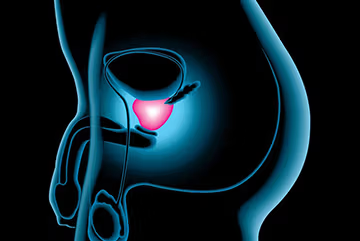
Radical prostatectomy is the procedure that removes the entire prostate gland together with the seminal vesicles and, depending on the case, the lymph nodes in the area. It is one of the treatments with curative intent for localised prostate cancer.
When it’s considered
Not every prostate cancer is operated on. The decision depends on the tumour grade, the PSA level, the extent seen on imaging and, very importantly, each patient’s age and general health. In low-risk tumours, active surveillance may be indicated — that is, monitoring with periodic checks rather than treating straight away.
The laparoscopic approach
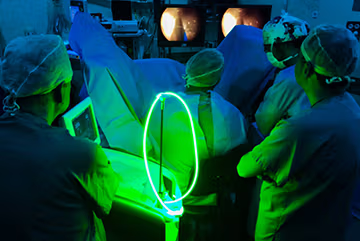
In extraperitoneal laparoscopic radical prostatectomy, the prostate is reached without entering the abdominal cavity, through small incisions. Compared with open surgery, it usually means less bleeding, less postoperative pain and a shorter hospital stay.
After the procedure
After surgery, a urinary catheter is worn for a few days. The two effects that cause most concern, and that are worth discussing before the operation, are:
Urinary incontinence
In most cases it improves progressively over the following months, aided by pelvic floor exercises.
Erectile dysfunction
Its likelihood depends on whether the neurovascular bundle could be preserved.
Follow-up afterwards
Follow-up afterwards is done with PSA checks. This article is for information only: the indication is always individual and should be assessed in consultation.
This article is for informational purposes only and does not replace a medical consultation. Each case requires an individual assessment.