What laparoscopic surgery is and why recovery is faster
Operating through incisions just a few millimetres wide: what it involves, which urological conditions it treats and what recovery looks like.
 Written and reviewed byAntonio Rodríguez Casado · COMG 17-4665
Last medically reviewed: 1 August 2026
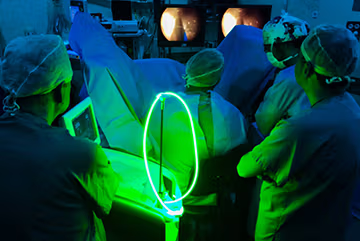
Laparoscopic surgery, also known as minimally invasive surgery or “keyhole surgery”, makes it possible to operate inside the abdomen without opening it up. Instead of one large incision, the surgeon works through three or four incisions of between 5 and 12 millimetres.
How it works
A camera is inserted through one of these incisions, transmitting a magnified image to a monitor. The instruments go in through the others. With 3D systems, the surgeon works with depth perception, which gives greater precision for fine movements, such as suturing.
What this treats in urology
In our practice, the laparoscopic approach is used mainly for:
- Kidney: partial or total removal for tumours, nephroureterectomy and pyeloplasty.
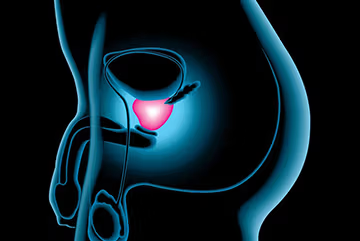
- Prostate: extraperitoneal radical prostatectomy for localised prostate cancer.
- Reconstructive surgery of the urinary tract.
What changes for the patient
Advantages over open surgery
Compared with open surgery, the laparoscopic route is usually associated with less pain after the procedure, less blood loss, a shorter hospital stay and a quicker return to normal activity. The scars are also much smaller.
When it isn’t the best option
Not every case is suitable: the decision depends on the type and size of the lesion, any previous abdominal surgery and each person’s general health. This is an assessment made individually during the consultation.
Our experience
Dr Antonio Rodríguez has performed more than 500 laparoscopic procedures as lead surgeon and holds a University Diploma in Laparoscopic Surgery from the Université de Strasbourg, as well as having completed training placements at the Minimally Invasive Surgery Centre in Cáceres.
This article is for informational purposes only and does not replace a medical consultation. Each case requires an individual assessment.